RTX 4070 Ti Super vs used RTX 3090 for local AI in 2026
16 GB Ada midrange; balanced consumer pick.
- VRAM
- 16 GB
- Bandwidth
- 672 GB/s
- TDP
- 285 W
- Price
- $800-1,000 (2026 retail)
24 GB Ampere classic; used-market price-per-VRAM king.
- VRAM
- 24 GB
- Bandwidth
- 936 GB/s
- TDP
- 350 W
- Price
- $700-1,000 (2026 used; inspect for mining wear)
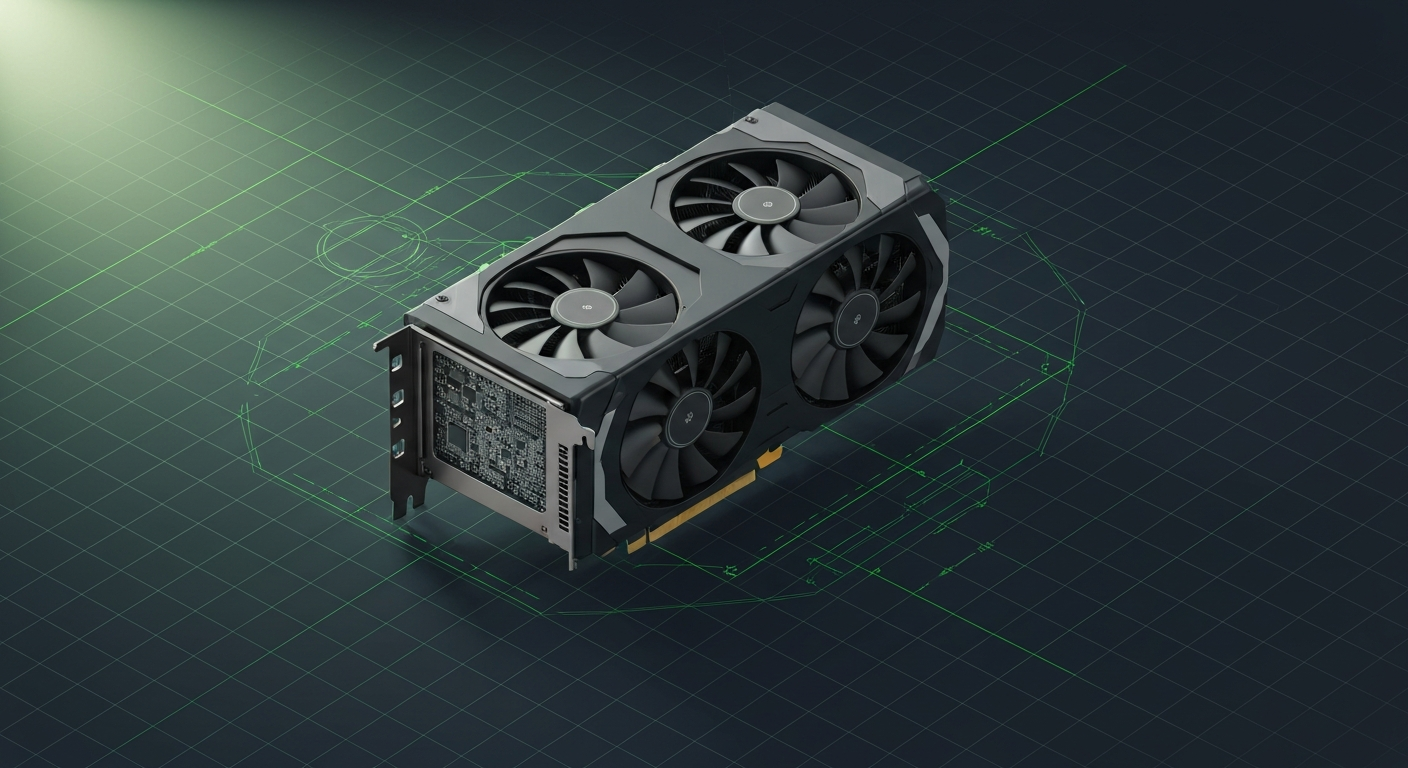
RTX 4070 Ti Super
16 GB Ada midrange; balanced consumer pick.
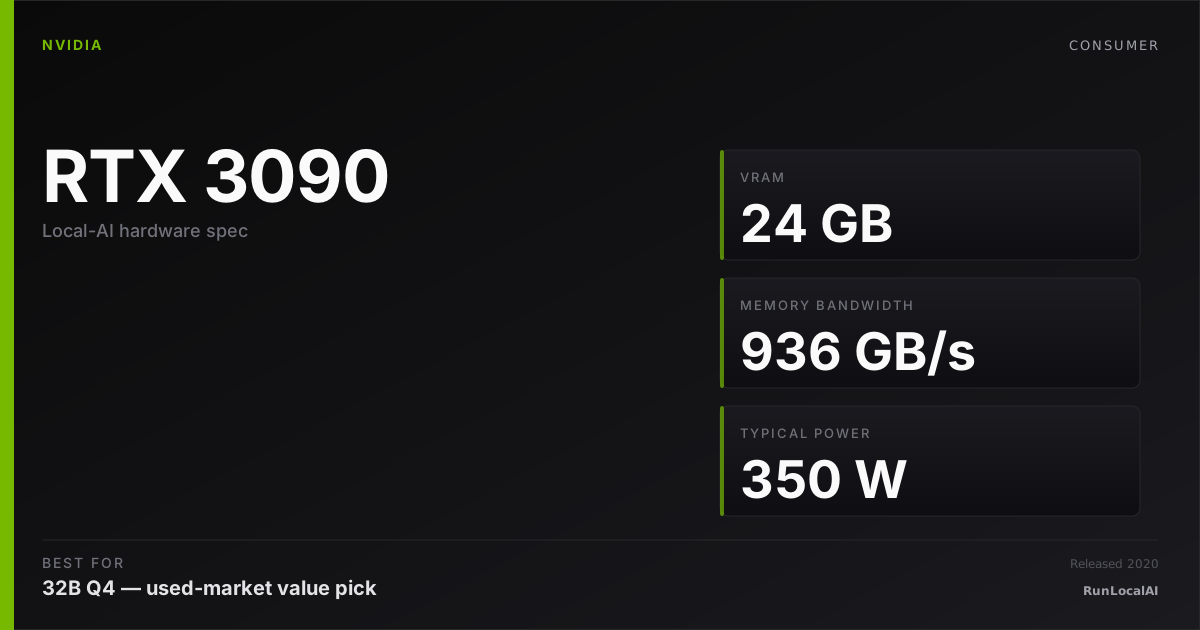
Used RTX 3090
24 GB Ampere classic; used-market price-per-VRAM king.
Same price tier (~$800-1,000) in 2026, different generation and VRAM ceiling. The RTX 4070 Ti Super (16 GB Ada, 672 GB/s, 285W, new with warranty) vs used RTX 3090 (24 GB Ampere, 936 GB/s, 350W, used with diligence). This is the most-asked comparison in the $800-1,000 bracket.
VRAM ceiling decides for 95% of buyers. 24 GB on the used 3090 fits 70B Q4 with comfortable context; 16 GB on the 4070 Ti Super caps you at short-context 70B Q4 or comfortable 32B Q4. For the workload that defines local AI in 2026, this gap is decisive.
The 4070 Ti Super wins on: Ada architecture (FP8), lower power (285W vs 350W), warranty, newer silicon, better resale path. The 3090 wins on: VRAM ceiling, 39% higher bandwidth (936 vs 672 GB/s), multi-GPU scaling economics. The honest call: 3090 for most, 4070 Ti Super for warranty-first buyers.
Who wins each workload
Each row is a workload local-AI operators actually run. Verdicts derived from VRAM math + bandwidth — no editorial hand-wave.
What each card actually runs
VRAM math against a canonical set of popular models. The largest context window that fits with headroom appears in each cell.
| Model | RTX 4070 Ti Super | Used RTX 3090 |
|---|---|---|
Qwen 3 14B Q4_K_M 14B params · Q4_K_M | 16K ctx, tight | 32K ctx |
Qwen 3 32B Q4_K_M 32B params · Q4_K_M | OOM | 4K ctx, tight |
Llama 3.3 70B Q4_K_M 70B params · Q4_K_M | OOM | OOM |
DeepSeek R1 distill 32B 32B params · Q4_K_M | OOM | 2K only |
Mixtral 8x22B Q4 141B params · Q4_K_M | OOM | OOM |
FLUX.1 image gen 12B params · FP16 | OOM | OOM |
Llama 3.3 70B Q4_K_M
Computed from each option's sustained TDP × predicted tok/s at $0.16/kWh. Cloud baseline: Claude Sonnet 4.6 (input + output).
Electricity-only cost — excludes the upfront hardware purchase, cooling, and amortized component depreciation. Hardware ROI math lives at /cost-vs-cloud; this line is for "is the marginal token cheaper than Claude?" not "should I buy this rig instead of paying Anthropic." MODELED ESTIMATE.
Quick decision rules
Operational matrix
| Dimension | RTX 4070 Ti Super 16 GB Ada midrange; balanced consumer pick. | Used RTX 3090 24 GB Ampere classic; used-market price-per-VRAM king. |
|---|---|---|
VRAM Decides 70B Q4 viability. | Limited 16 GB GDDR6X. 70B Q4 short-context only; 13-32B Q4 comfortable. | Strong 24 GB GDDR6X. 70B Q4 at 4-8K context; FP16 13B comfortable. |
Memory bandwidth Decode speed. | Acceptable 672 GB/s. Lower than expected for the Ada mid-tier. | Strong 936 GB/s. ~39% faster decode on memory-bound workloads. |
CUDA generation Architecture + features. | Strong Ada Lovelace. FP8 support. Efficient modern tensor cores. | Acceptable Ampere. No FP8. Older tensor cores but mature + stable. |
Power draw TDP under inference. | Strong 285W. 750W PSU sufficient. Ada efficiency real. | Limited 350W. 850W PSU recommended. Hot under sustained load. |
Warranty + risk Recourse on failure. | Excellent 3-year manufacturer warranty. New silicon. | Limited None (used). Pre-purchase stress test + ECC check required. |
Age risk Years of prior use. | Excellent 2024+ silicon. ~0-2 years of wear. | Limited 2020-2021 silicon. 4-6 years of potential mining / AI duty. |
Resale value (3 yr) What you recover. | Acceptable ~50-55% expected. Mid-tier Ada; squeezed by Blackwell below + used 4090 above. | Strong ~55-65% of purchase. 24 GB tier holds value; rare-VRAM premium props the floor. |
Tiers are qualitative editorial labels, not derived from a single benchmark. For tok/s and VRAM measurements on these cards, browse the corpus or request a benchmark.
Who should AVOID each option
Avoid the RTX 4070 Ti Super
- If 70B Q4 at usable context is your daily (16 GB blocks you)
- If 936 GB/s bandwidth vs 672 GB/s matters (3090 wins by 39%)
- If multi-GPU scaling is on the roadmap (used 3090 pair demolishes)
Avoid the Used RTX 3090
- If you can't tolerate buying used silicon (psychology, warranty needs)
- If you're a first-time AI hardware buyer (4070 Ti Super is safer)
- If you specifically want Ada + FP8 for compute-bound workloads
Workload fit
RTX 4070 Ti Super fits
- 13-32B Q4 + image gen with warranty
- First-time AI buyers at $800-1,000
- Power-efficient Ada builds
Used RTX 3090 fits
- 70B Q4 at comfort
- Multi-GPU homelab path
- Best $/GB-VRAM at $800-1,000
Reality check
The 3090's bandwidth advantage (936 vs 672 GB/s) is larger than most buyers realize. On memory-bound 70B Q4 decode, the 3090 is genuinely ~40% faster — VRAM is the ceiling argument but bandwidth is the speed argument.
If you're one of the many buyers comparing these two, the answer for 90% of cases is: used 3090. The VRAM + bandwidth combo at the same price is compelling. The warranty question is the only defensible reason to pick 4070 Ti Super.
The 4070 Ti Super's 672 GB/s is the awkward spec — it costs as much as a used 3090 but delivers meaningfully lower bandwidth. For local AI specifically, it's hard to recommend over a healthy used 3090 at this tier.
Used-market notes
- Used 3090: 30-min sustained inference stress test is minimum diligence. ECC error count > 100 = walk away.
- Replace thermal pads on any 3090 > 18 months old. ~$30-50 + 1 hour for 5-10°C improvement.
- Ex-mining cards are common. Mining wears fans + pads (replaceable), not silicon. Verify no aggressive overclock history.
Power, noise, and heat
- 4070 Ti Super sustained: 260-280W actual draw. Runs 65-72°C. Quieter at equivalent throughput.
- 3090 sustained: 320-350W actual draw. Runs 75-85°C. Audibly louder under continuous load.
- Annual electricity (4hrs/day): 4070 Ti Super ~$60, 3090 ~$80. Marginal but real.
Where to buy
Where to buy Used RTX 3090
Editorial price range: $700-1,000 (2026 used; inspect for mining wear)
Affiliate links — no extra cost. Prices are editorial ranges, not real-time. Click through to verify.
Some links above are affiliate links. We may earn a commission at no extra cost to you. How we make money.
Editorial verdict
For 90% of buyers at the $800-1,000 tier: buy a used RTX 3090. 24 GB VRAM at $700-1,000 with 936 GB/s bandwidth is the used-market value champion in 2026. The diligence cost (stress test, pad replacement) is real but small vs the capability gained.
Buy the RTX 4070 Ti Super only if buying used silicon is a hard personal dealbreaker. The Ada architecture + warranty + lower power are real advantages — but they cost you 8 GB VRAM and 264 GB/s of bandwidth at the same price.
If warranty is non-negotiable and you need 24 GB, the used 4090 at $1,400-1,900 or a new 5090 at $2,000-2,500 are the warranty-compatible 24+ GB paths. The 4070 Ti Super is the wrong card wrapped in warranty paper.
HonestyWhy benchmark numbers on this page might not reflect your real experience
- tok/s is not user experience. Humans read at ~10-15 tok/s — anything above that is buffer time, not perceived speed.
- Context length changes everything. A 70B Q4 model at 1024 tokens generates ~25 tok/s; the same model at 32K context drops to ~8-12 tok/s as KV cache fills.
- Quantization changes the conclusion. Q4_K_M vs Q5_K_M vs Q8 produce different speed AND different quality. A benchmark at one quant doesn't translate to another.
- Thermal throttling changes long sessions. The first 15 minutes of a benchmark see boost-clock peak; the next 4 hours see steady-state, which is 5-15% slower depending on case airflow.
- Driver and runtime versions silently shift winners. A 2024 benchmark on PyTorch 2.4 + CUDA 12.4 doesn't reflect 2026 reality on PyTorch 2.6 + CUDA 12.6. Discount benchmarks older than 6 months.
- Vendor and YouTuber benchmarks are cherry-picked. The standard 'Llama 3.1 70B Q4 at 1024 tokens' chart shows peak decode on a tiny prompt — exactly the conditions least representative of daily use.
- A 25-30% throughput gap between two cards rarely translates to a 25-30% experience gap. Both cards are fast enough; the differentiator is usually VRAM ceiling, not raw decode speed.
We try to surface these caveats where they apply. If a number on this page reads more confident than it should, please email us via contact. See also our methodology and editorial philosophy.
Don't see your specific workload?
The matrix above is editorial. If you want a measured tok/s number for a specific model + quant on either card, file a benchmark request — the community claims requests and reproduces them under our methodology checklist.