Apple M3 Max
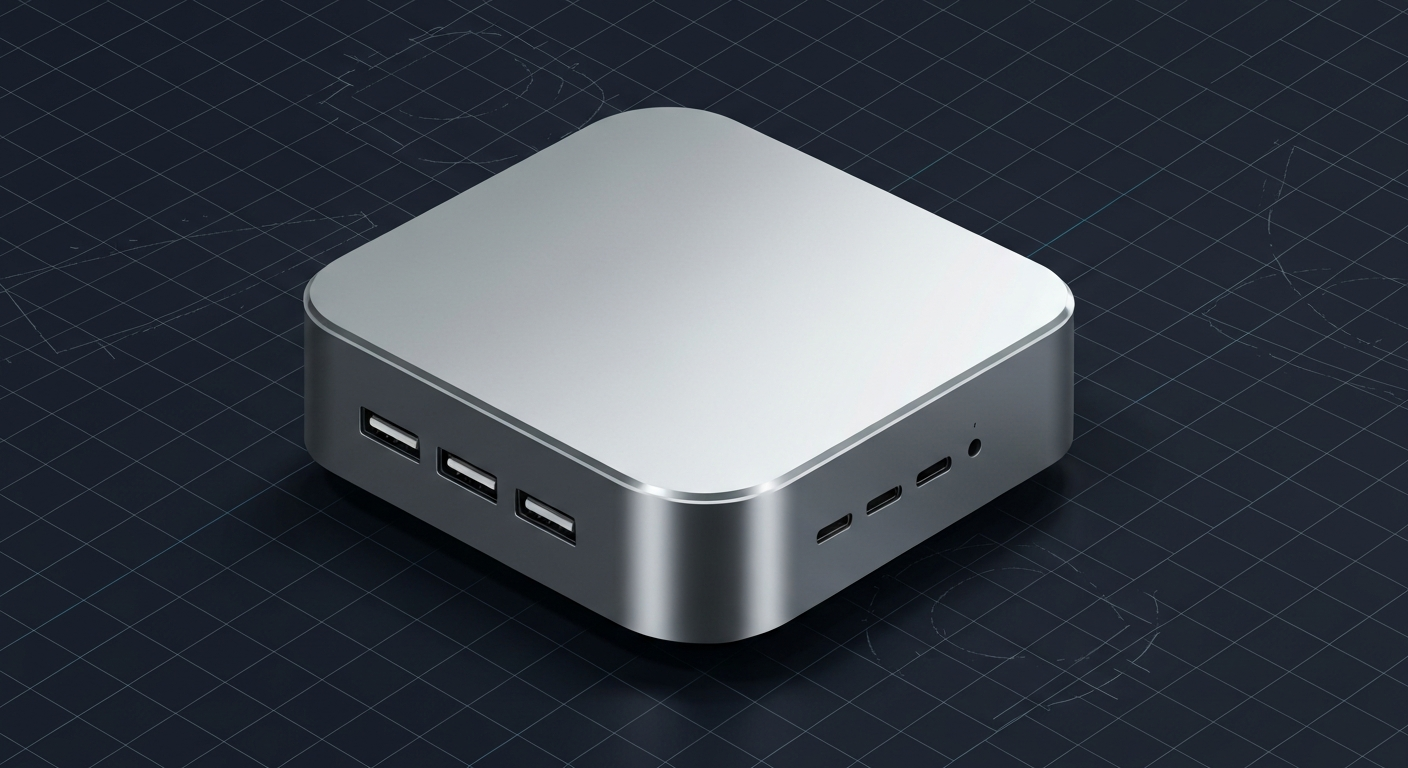
M3 Max — 400 GB/s bandwidth, up to 128GB.
Affiliate disclosure: as an Amazon Associate and partner of other retailers, we earn from qualifying purchases. The verdict on this page is our editorial opinion; affiliate links never influence what we recommend.
Sub-scores sum to 569 / 1000. Headline = 569 × 0.70 (Estimated-confidence discount) = 398. This is an algorithmic performance-tier score — distinct from, and often lower than, the editorial “Our verdict” below, which weighs value and real-world fit (especially for hardware we haven’t measured yet). How scoring works →
Extrapolated from 400 GB/s bandwidth — 56.0 tok/s estimated. No measured benchmarks yet.
Plain-English: Runs 70B with care — snappy enough for a coding agent; vision models supported.
Verdicts extrapolated from catalog VRAM + bandwidth + ecosystem flags. Hover any chip for the rationale. Want measured numbers? Submit your own run with runlocalai-bench --submit.
What it does well
Unified memory architecture. A 64 GB M3 Max runs Llama 3.3 70B at Q4 entirely in fast memory — no system-RAM offload, no partial-offload speed cliff, just steady 12–18 tok/s. The 96 GB and 128 GB configurations open up Llama 4 Scout / DeepSeek V3 territory that no consumer NVIDIA card touches. MLX is a clean, fast runner that takes advantage of the architecture.
Where it breaks
- Tokens/sec on 7–32B class trails NVIDIA — same model, 4090 is 2–3× faster. Apple wins on accessibility, not raw throughput.
- MLX is Apple-only — your model investments don't transfer to NVIDIA without re-quantizing.
- High-memory configs are expensive — a 128 GB M3 Max MacBook Pro pushes past $7,000.
Ideal model range
- Sweet spot: Llama 3.3 70B / R1 Distill Llama 70B at Q4 — 12–18 tok/s, no offload concerns. The reason you bought it.
- Stretch (96–128 GB configs): Llama 4 Scout, DeepSeek V3 at Q3/Q4, Llama 4 Maverick with quantization compromises.
- Comfortable: 32B-class at MLX-native quants with low latency, multimodal models (Gemma 3, Pixtral) with strong vision-language.
Bad use cases
- Maximum tokens-per-second — NVIDIA wins for any model that fits a 4090.
- Coder autocomplete — Apple's tok/s on Qwen 2.5 Coder 32B is half a 4090's; latency in the editor matters.
- Cloud-equivalent throughput per dollar — for high-volume inference, NVIDIA-on-cloud is better $/output.
Verdict
Buy this if you want a portable 70B-capable rig, you already use macOS for development, or you want the easiest path to running models that don't fit a 4090. Skip this if you prioritize raw throughput, run models that fit a 24 GB CUDA card, or do agent-loop / autocomplete workloads where latency matters.
How it compares
- vs RTX 4090 → 4090 is faster on models that fit 24 GB; M3 Max wins on 70B-class with no offload hassle. Different jobs.
- vs M2 Ultra (192 GB Mac Studio) → M2 Ultra has more memory bandwidth and unified-memory ceiling — better for Llama 4 Maverick / DeepSeek V3 territory.
- vs M4 Max → M4 Max is the architectural successor with materially better tokens/sec at the same memory config; pick M4 Max if available.
- vs Linux + RX 7900 XTX → AMD wins on price for 32B-class; M3 Max wins on 70B-class accessibility and out-of-box experience.
›Why this rating
8.5/10 — for users who want to run 70B-class models without hardware acrobatics, Apple Silicon with 64+ GB unified memory is genuinely the easiest path. Slower than CUDA on equivalent VRAM but no offload tax. Loses points on raw tokens-per-second vs NVIDIA + on price for the high-memory configurations.
Overview
M3 Max — 400 GB/s bandwidth, up to 128GB.
Some links above are affiliate links. We may earn a commission at no extra cost to you. How we make money.
Featured in this stack
The L3 execution stacks that pick this hardware as a recommended component, with the one-line note explaining the role it plays in each.
- Stack · L3·Workstation tier·Role: Compute (Apple Silicon GPU + unified memory)Build a Mac-native AI stack (May 2026)
M3 Max 64GB is the single-Mac sweet spot in May 2026 — 36 GPU cores, 400 GB/s memory bandwidth, all 64GB addressable as VRAM. M4 Pro / M4 Max win on Thunderbolt 5 RDMA for clustering; for single-Mac use, M3 Max delivers 90% of M4 Max throughput at lower price.
Specs
| VRAM | 0 GB |
| System RAM (typical) | 96 GB |
| Power draw (peak) | 95 W |
| Released | 2023 |
| Backends | Metal MLX |
Hardware worth comparing
The closest alternatives by price, memory bandwidth, and form factor, plus a step up and down — so you can frame the buying decision against real options.
Frequently asked
Does Apple M3 Max support CUDA?
Where next?
Reviewed by RunLocalAI Editorial. See our editorial policy for how we research and verify hardware specifications.