AMD Radeon RX 7800 XT
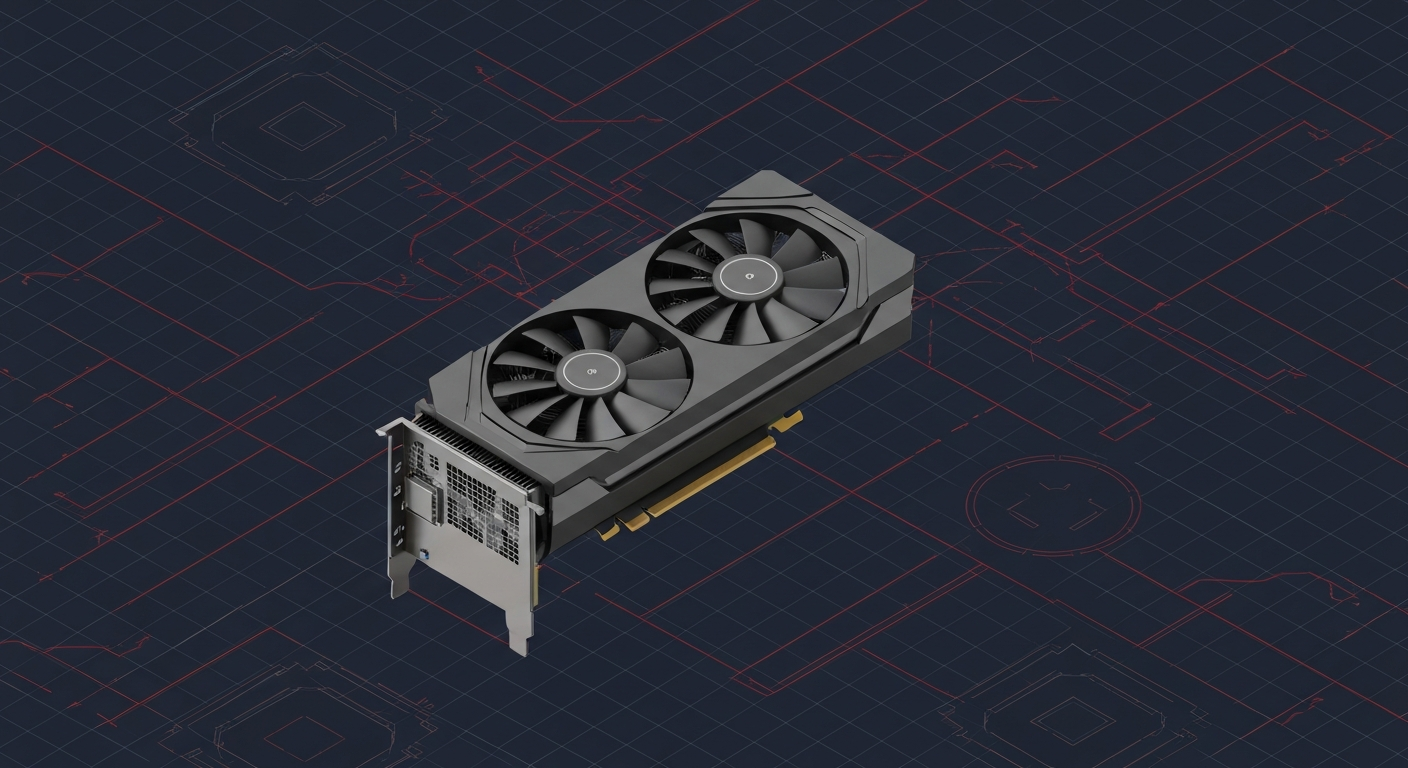
16GB RDNA 3 mid-range.
Affiliate disclosure: as an Amazon Associate and partner of other retailers, we earn from qualifying purchases. The verdict on this page is our editorial opinion; affiliate links never influence what we recommend.
Sub-scores sum to 470 / 1000. Headline = 470 × 0.70 (Estimated-confidence discount) = 329. This is an algorithmic performance-tier score — distinct from, and often lower than, the editorial “Our verdict” below, which weighs value and real-world fit (especially for hardware we haven’t measured yet). How scoring works →
Extrapolated from 624 GB/s bandwidth — 62.4 tok/s estimated. No measured benchmarks yet.
Plain-English: Comfortable at 14B and below — snappy enough for a coding agent.
Verdicts extrapolated from catalog VRAM + bandwidth + ecosystem flags. Hover any chip for the rationale. Want measured numbers? Submit your own run with runlocalai-bench --submit.
What it does well
The RX 7800 XT is AMD's value 16 GB consumer card and the most accessible AMD pathway into "real local AI on a budget." 16 GB GDDR6 at 624 GB/s + RDNA 3 compute units at $499 retail / $400-450 used. The 16 GB VRAM ceiling is meaningful — it's enough memory to run 7B–13B class models with comfortable context, smaller MoE models, and 32B Q4 with limited context. RDNA 3 + ROCm 6.x for Linux + DirectML for Windows means the basic local AI software stack works: llama.cpp ROCm, Ollama AMD support, LM Studio with Vulkan/DirectML backend. Power draw at 263 W TDP is reasonable. For buyers who specifically want AMD (vendor diversification, prior AMD ecosystem familiarity, ideological preference) and are cost-conscious, RX 7800 XT is the right entry-tier pick.
Where it breaks
- No CUDA — full stop. vLLM, SGLang, TensorRT-LLM, ExLlamaV2, most fine-tuning libraries — none run on AMD Radeon. ROCm + llama.cpp + DirectML cover the basics but the long tail of CUDA-only frameworks doesn't.
- ROCm on consumer Radeon is rougher than ROCm on Instinct. Production-grade ROCm targets MI300X / MI325X tier — consumer RDNA 3 support is functional but receives less optimization attention. Driver issues exist in 2026.
- Bandwidth ceiling vs equivalent NVIDIA. 624 GB/s is below RTX 4070 Ti Super's 672 GB/s (similar-priced NVIDIA 16 GB Ada). For memory-bound decode, NVIDIA equivalents are slightly faster.
- Pricing competition is harsh. RTX 4070 Ti Super (16 GB) at $799 MSRP has full CUDA stack + slightly more compute + similar bandwidth at +$300. RTX 5070 Ti (16 GB) at $749 MSRP has FP4 native at +$250.
- Day-zero new model support is uneven. AMD Radeon LLM support typically arrives weeks-to-months after NVIDIA for new architectures. Not blocker for established models; can be friction for early-adopter workloads.
- Limited fine-tuning paths. ROCm consumer fine-tuning is theoretically supported but practically rough. NVIDIA wins decisively for fine-tuning workflows.
Ideal model range
- Sweet spot: 7B–13B FP16 inference at ~60–90 tok/s decode with 32K context. Genuinely strong for this tier.
- Sweet spot: 14B Q4–Q5 with 16K context — fits 16 GB comfortably.
- Sweet spot: Smaller MoE models (Qwen 3 30B-A3B at Q4–Q5) — fits 16 GB with reasonable speed.
- Sweet spot: Multi-model agentic loops fitting 16 GB total — 7B + 4B + embedding + speculative decoder.
- Stretch: 32B Q4 with 8K context (~30 tok/s; fits 16 GB tight).
- Bad fit: 70B-class anything, fine-tuning at scale, CUDA-only frameworks.
Bad use cases
- CUDA-locked stacks. Don't pick AMD Radeon if your toolchain requires CUDA.
- Production multi-tenant serving. Consumer pick, not production.
- Maximum decode throughput on small models. RTX 4070 Ti Super or RTX 5070 Ti win.
- Frontier-model serving (32B+) where it matters. Pick 24 GB+ NVIDIA — used 3090, 4090, 5090.
- Anyone wanting day-zero new model support. ROCm + AMD consumer always lags CUDA.
- Heavy fine-tuning workflows. Wrong tier — NVIDIA wins.
Verdict
Buy this if you specifically want AMD (vendor diversification, ROCm familiarity, ideological preference), your workload is firmly 7B–14B FP16 / Q5, you can absorb the modest software-ecosystem friction (llama.cpp + Ollama + LM Studio cover the basics), and the $300 saving vs RTX 4070 Ti Super at $799 matters. RX 7800 XT is the right "AMD entry into local AI" pick.
Skip this if your stack requires CUDA (don't fight the ecosystem), you want maximum throughput (RTX 4070 Ti Super or RTX 5070 Ti wins), you need fine-tuning at scale (NVIDIA), you target 24+ GB workloads (used 3090 wins), or you want day-zero new model support (NVIDIA always wins on framework support timing).
How it compares
- vs RTX 4070 Ti Super (16 GB) → Same VRAM tier. 4070 Ti Super has full CUDA + ~7% more bandwidth + ~30% more compute + Ada-gen FP8 at +$300. Pick 4070 Ti Super for ecosystem certainty + speed; 7800 XT for AMD-aligned value buyers.
- vs RTX 5070 Ti (16 GB) → Same VRAM. 5070 Ti has Blackwell + FP4 native + CUDA at +$250 MSRP. Pick 5070 Ti for new NVIDIA builds; 7800 XT for AMD value.
- vs RX 7900 XT (20 GB) → 7900 XT has 25% more VRAM + ~50% more compute at +$400 MSRP. Pick 7900 XT for AMD-aligned 20 GB workloads; 7800 XT for AMD entry tier.
- vs used RTX 3060 12GB → 3060 12GB at $329 MSRP / $200 used has 25% less VRAM + half the compute at half the price. Pick 3060 12GB for absolute budget; 7800 XT for 16 GB ceiling + faster compute.
- vs RX 9070 → RX 9070 is the next-gen RDNA 4 successor at $549 MSRP — similar VRAM tier with architecture refresh. Pick RX 9070 for new AMD builds when available; RX 7800 XT for value RDNA 3 used buys.
Overview
16GB RDNA 3 mid-range.
Some links above are affiliate links. We may earn a commission at no extra cost to you. How we make money.
Specs
| VRAM | 16 GB |
| Power draw (peak) | 263 W |
| Released | 2023 |
| MSRP | $499 |
| Backends | ROCm Vulkan |
Models that fit
Open-weight models small enough to run on AMD Radeon RX 7800 XT with usable context.
Hardware worth comparing
The closest alternatives by price, memory bandwidth, and form factor, plus a step up and down — so you can frame the buying decision against real options.
Curated head-to-heads against specific cards — the buyer-decision shape that crosses VRAM bands.
The 7800 XT is the budget AMD AI card — 16 GB ROCm at $500-650 on Linux. The buyer decision below covers where ROCm support is mature enough.
Frequently asked
What models can AMD Radeon RX 7800 XT run?
Does AMD Radeon RX 7800 XT support CUDA?
How much does AMD Radeon RX 7800 XT cost?
Where next?
Reviewed by RunLocalAI Editorial. See our editorial policy for how we research and verify hardware specifications.