NVIDIA GeForce RTX 3080 16GB (Mobile)
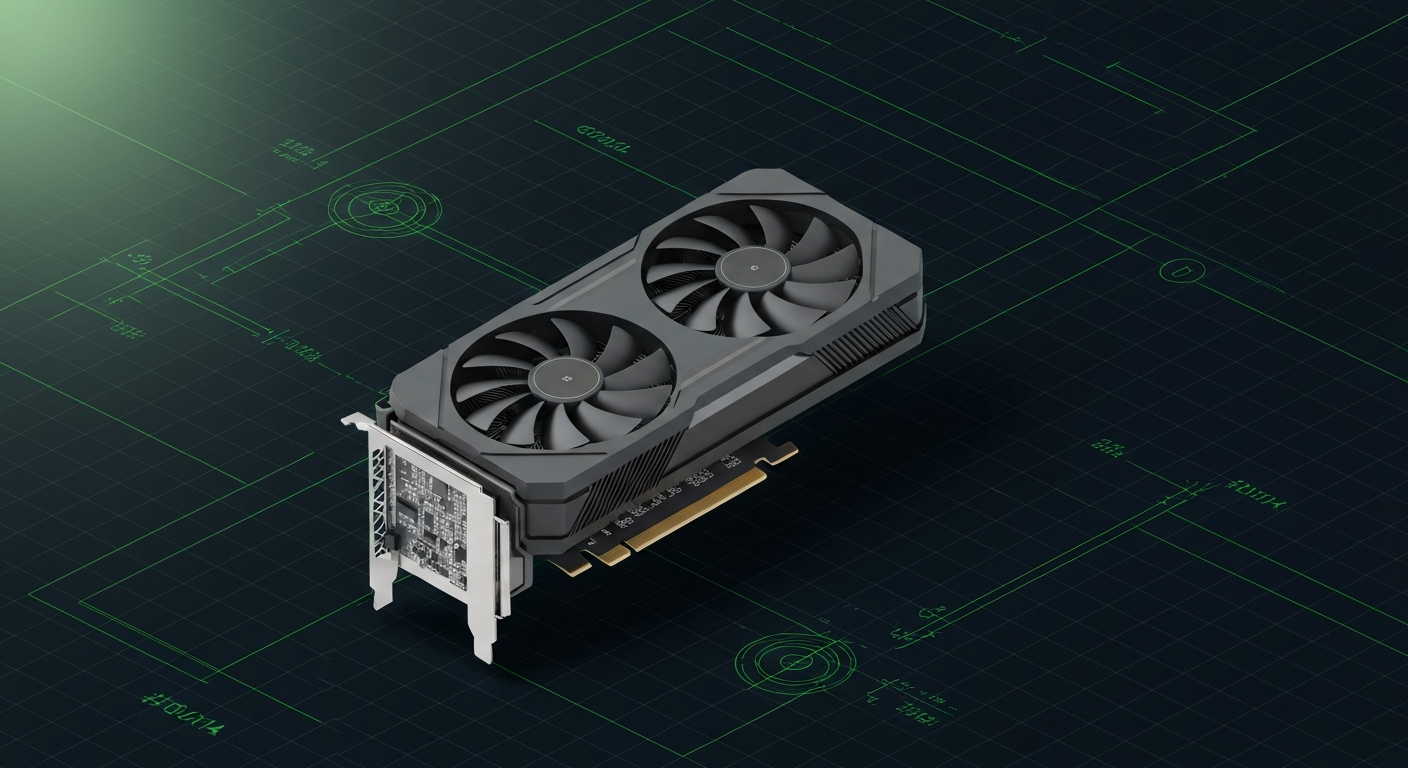
Laptop variant of Ampere. 16GB VRAM in a portable form factor was rare and remains a sleeper pick on the used market.
Affiliate disclosure: as an Amazon Associate and partner of other retailers, we earn from qualifying purchases. The verdict on this page is our editorial opinion; affiliate links never influence what we recommend.
Sub-scores sum to 702 / 1000. No confidence discount applied — measured data. This is an algorithmic performance-tier score — distinct from, and often lower than, the editorial “Our verdict” below, which weighs value and real-world fit (especially for hardware we haven’t measured yet). How scoring works →
Anchored to high-confidence owner measured benchmark with provenance evidence on Mistral Turkish v2 (brooqs) — 106.8 tok/s. VRAM 16GB · nvidia/high ecosystem.
Anchored to brooqs-mistral-turkish-v2-latest · 106.8 tok/s · high-confidence
Plain-English: Comfortable at 14B and below — snappy enough for a coding agent; vision models supported.
Verdicts extrapolated from catalog VRAM + bandwidth + ecosystem flags. Hover any chip for the rationale. Want measured numbers? Submit your own run with runlocalai-bench --submit.
What it does well
The RTX 3080 16GB Mobile is the higher-VRAM laptop variant of NVIDIA's late-Ampere mobile flagship, shipped 2022-2024 in mid-to-upper-tier gaming laptops (Lenovo Legion 5/7 Pro, ASUS ROG Strix/Zephyrus, MSI GE/GP/Stealth, Razer Blade 15/17). 16 GB GDDR6 at 384 GB/s effective (varies 320-450 GB/s by laptop TGP profile) + Ampere mobile tensor cores. The 16 GB VRAM ceiling is genuinely useful for laptop AI: fits 7B-14B FP16 with comfortable context, smaller MoE models, 32B Q4 with limited context. Full CUDA stack works (sm_86 Ampere mobile): Ollama, LM Studio, llama.cpp, single-card vLLM, ExLlamaV2. Power envelope under load is 80-150 W depending on the laptop's GPU TGP configuration. Used market is rich — these laptops were sold at scale in 2022-2024 and are now in $1,200-$1,800 used market territory, often with 16-32 GB system RAM included.
Where it breaks
- Mobile bandwidth is variable and often disappointing. Effective bandwidth ranges 320-450 GB/s depending on the laptop's GPU power profile (TGP, configurable in BIOS on some laptops). Many laptop OEMs ship with 95-115 W TGP for thermal reasons; the chip can run at 165+ W in flagship designs. Read laptop reviews carefully for the specific TGP — performance varies dramatically.
- Architecture is two generations behind in 2026. Ada Lovelace (RTX 4070/4080 Mobile) and Blackwell (RTX 5070/5080/5090 Mobile) deliver dramatically better tensor compute. New CUDA features land on Ada / Blackwell first.
- No FP8 native (Ampere limitation). Modern frameworks that exploit FP8 throughput don't get speedup.
- Sustained thermal throttling. Laptop GPUs throttle aggressively under sustained inference vs desktop equivalents. Plan for 30-50% throughput reduction on extended runs.
- Battery life under inference is 1-2 hours. Plug in for serious work — same fundamental laptop AI constraint as all discrete-GPU laptops.
- Resale market is saturated. Many laptops with this GPU spec; pricing is competitive but availability of well-cared-for units is thinner than peak.
- Not all "RTX 3080 16GB" laptops are equal. Laptop OEMs varied dramatically in cooling, screen quality, build quality, and TGP. Read reviews specific to your candidate laptop.
Ideal model range
- Sweet spot: 7B–14B FP16 inference at ~35–60 tok/s decode with 32K context (varies by laptop TGP).
- Sweet spot: Smaller MoE inference (sub-14B parameters active) — fits 16 GB with reasonable speed.
- Sweet spot: Multi-model agentic loops fitting 16 GB total — 7B + 4B + embedding + speculative decoder.
- Sweet spot: Local development for CUDA-stack production targets — your laptop runs the same software as production, just slower.
- Sweet spot: Travel-friendly 16 GB CUDA on a budget — laptops with this GPU are now in the $1,200-1,800 used market.
- Stretch: 32B Q4 with 8K context (25-35 tok/s; fits 16 GB tight).
- Bad fit: 70B-class anything, fine-tuning at scale, sustained 24×7 inference.
Bad use cases
- Sustained 24×7 inference. Wrong tier — laptops aren't built for that.
- Maximum tok/s. Newer mobile GPUs (RTX 4070 Mobile, RTX 5070 Ti Mobile, RTX 5090 Mobile) win meaningfully on bandwidth + compute.
- 70B FP16 laptop work. MacBook Pro 16 M4 Max at 128 GB unified is the only laptop class that does this.
- Anyone needing FP8 / FP4 native. Pick newer-gen laptops with RTX 4070+ Mobile or 5060+ Mobile.
- Buyers paying new-laptop prices. $2,000+ for a 2022-2024 generation laptop is hard to justify in 2026 when Razer Blade 16 with RTX 5090 Mobile (24 GB) is $4,499 with dramatically better hardware.
- Cost-floor 16 GB CUDA buyers building a desktop. A used RTX 4080 16GB at $700 plus a $700 desktop build = same money, dramatically better thermals + sustained throughput.
Verdict
Buy this if you find a laptop with RTX 3080 16GB Mobile in the $1,200-$1,800 used range (Lenovo Legion 5/7 Pro Gen 7, ASUS ROG Strix/Zephyrus 2022-2023, etc.), you want a discrete-GPU AI laptop on a serious budget, your workload is firmly 7B-14B class with occasional 32B Q4 use, you accept 30-50% throughput reduction on sustained inference, and you don't need current-gen architecture features. RTX 3080 16GB Mobile laptops are the right pick for the cost-conscious traveling developer who needs CUDA + 16 GB + actual portability.
Skip this if the laptop's GPU TGP is below 105 W (performance gap to flagship-tier 3080 Mobile is meaningful — read reviews for your specific model), you can stretch to current-gen Blackwell-mobile laptops (Razer Blade 16 or ASUS ROG Strix Scar 18 at $4,000+ have 24 GB CUDA + Blackwell), you don't actually travel meaningfully (build a desktop with used RTX 4080 at $700 — much better), you need FP8/FP4 (newer-gen mobile), or you want premium build quality (varies dramatically by laptop OEM).
How it compares
- vs Lenovo Legion 5 Pro Gen 7 (RTX 3080 16GB) → The Legion 5 Pro Gen 7 is one of the most popular laptops shipping with this exact GPU. Specific laptop verdict covers chassis quality + display + TGP + thermal headroom for that model. RTX 3080 16GB Mobile spans many laptops — read individual laptop verdicts for chassis-specific tradeoffs.
- vs Razer Blade 16 (RTX 5090 Mobile, 24 GB) → Razer Blade 16 has 50% more VRAM + Blackwell-gen + FP4 native + dramatically better build quality + premium aesthetics at +$2,500-3,000. RTX 3080 16GB laptops win on price by ~50%. Pick Razer Blade 16 if budget allows; 3080 16GB Mobile laptops for value entry.
- vs ASUS ROG Strix Scar 18 (RTX 5090 Mobile, 24 GB) → Strix Scar 18 has 50% more VRAM + Blackwell + 18-inch chassis at +$2,000+. 3080 16GB laptops win on price + portability (16-inch chassis is significantly more carryable).
- vs MacBook Pro 16 M4 Max (128 GB unified) → MBP 16 wins on memory ceiling (8× the VRAM-equivalent), battery life, silence, build quality, ecosystem (MLX is more polished than Windows-CUDA). 3080 16GB laptops win on price by 40-50% + Windows-CUDA compatibility. Pick by ecosystem and budget.
- vs Framework Laptop 16 (RX 7700S 8 GB) → Framework has half the VRAM + repairability + AMD ecosystem at -$300. Pick Framework for repairability and AMD ecosystem; 3080 16GB Mobile laptops for 16 GB CUDA value.
- vs desktop used RTX 4080 (16 GB) build → Desktop wins on every dimension except portability — better thermals, sustained workloads, total system cost. If portability isn't a real requirement, build desktop instead.
Overview
Laptop variant of Ampere. 16GB VRAM in a portable form factor was rare and remains a sleeper pick on the used market.
Some links above are affiliate links. We may earn a commission at no extra cost to you. How we make money.
Specs
| VRAM | 16 GB |
| System RAM (typical) | 32 GB |
| Power draw (peak) | 165 W |
| Released | 2022 |
| Backends | CUDA Vulkan |
Benchmarks on this unit
Real measurements on NVIDIA GeForce RTX 3080 16GB (Mobile). Numbers ship with the runner version, quant, and date so you can reproduce them.
| Model | Provenance | Quant | Ctx | Tokens / sec | TTFT | Date |
|---|---|---|---|---|---|---|
| Llama 3.2 1B Instruct | EditorialM | Q4_K_M | 4K | 189.5tok/s | 359 ms | Jun 2, 26 |
| Kumru 2B | EditorialM | Q4_K_M | 4K | 174.2tok/s | 129 ms | Jun 2, 26 |
| Gemma 3 1B | EditorialM | Q4_K_M | 4K | 160.4tok/s | 790 ms | Jun 2, 26 |
| Phi-3.5 Mini Instruct | EditorialM | Q4_K_M | 4K | 155.4tok/s | 66 ms | Jun 2, 26 |
| DeepSeek Coder V2 Lite (16B) | EditorialM | Q4_K_M | 4K | 152.0tok/s | 211 ms | Jun 2, 26 |
| Mistral Turkish v2 (brooqs) | EditorialM | Q4_K_M | 4K | 106.8tok/s | 73 ms | Jun 2, 26 |
| Qwen 3 4B | EditorialM | Q4_K_M | 4K | 103.7tok/s | 303 ms | Jun 2, 26 |
| Gemma 4 E2B (Effective 2B) | EditorialM | Q4_K_M | 4K | 99.1tok/s | 792 ms | Jun 2, 26 |
| Gemma 3 4B | EditorialM | Q4_K_M | 4K | 97.7tok/s | 743 ms | Jun 2, 26 |
| Mistral 7B Instruct v0.3 | EditorialM | Q4_K_M | 4K | 89.6tok/s | 80 ms | Jun 2, 26 |
| Malhajar Mistral 7B Turkish | EditorialM | Q4_K_M | 4K | 87.3tok/s | 74 ms | Jun 2, 26 |
| Turkcell LLM 7B v1 | EditorialM | Q4_K_M | 4K | 85.8tok/s | 96 ms | Jun 2, 26 |
| Hermes 3 Llama 3.1 8B | EditorialM | Q4_K_M | 4K | 81.5tok/s | 357 ms | Jun 2, 26 |
| CodeGemma 7B | EditorialM | Q4_K_M | 4K | 80.6tok/s | 383 ms | Jun 2, 26 |
| Qwen 2.5 7B Instruct | EditorialM | Q4_K_M | 4K | 80.4tok/s | 335 ms | Jun 2, 26 |
| DeepSeek R1 Distill Qwen 7B | EditorialM | Q4_K_M | 4K | 80.3tok/s | 300 ms | Jun 2, 26 |
| RefinedNeuro RN TR R1 | EditorialM | Q4_K_M | 4K | 79.9tok/s | 361 ms | Jun 2, 26 |
| RefinedNeuro RN TR R2 | EditorialM | Q4_K_M | 4K | 79.3tok/s | 366 ms | Jun 2, 26 |
| Gemma 4 E4B (Effective 4B) | EditorialM | Q4_K_M | 4K | 78.1tok/s | 790 ms | Jun 2, 26 |
| Gemma 2 9B Instruct | EditorialM | Q4_K_M | 4K | 68.2tok/s | 358 ms | Jun 2, 26 |
Models that fit
Open-weight models small enough to run on NVIDIA GeForce RTX 3080 16GB (Mobile) with usable context.
Hardware worth comparing
The closest alternatives by price, memory bandwidth, and form factor, plus a step up and down — so you can frame the buying decision against real options.
- 7.3/10NVIDIA GeForce RTX 4090 Mobilenvidia · 16 GB VRAM
- 10.0/10MacBook Pro 16" M4 Maxapple · 546 GB/s
- 7.1/10NVIDIA GeForce RTX 5070 Laptop GPUnvidia · 12 GB VRAM
- 9.3/10Lenovo Legion 5 Pro Gen 7 (RTX 3080 16GB)nvidia · 16 GB VRAM
- 8.6/10NVIDIA GeForce RTX 5090 Mobilenvidia · 24 GB VRAM
- 8.9/10Framework Laptop 16 (RX 7700S)amd · 8 GB VRAM
Frequently asked
What models can NVIDIA GeForce RTX 3080 16GB (Mobile) run?
Does NVIDIA GeForce RTX 3080 16GB (Mobile) support CUDA?
Where next?
Reviewed by RunLocalAI Editorial. See our editorial policy for how we research and verify hardware specifications.