NVIDIA GeForce RTX 3090 Ti
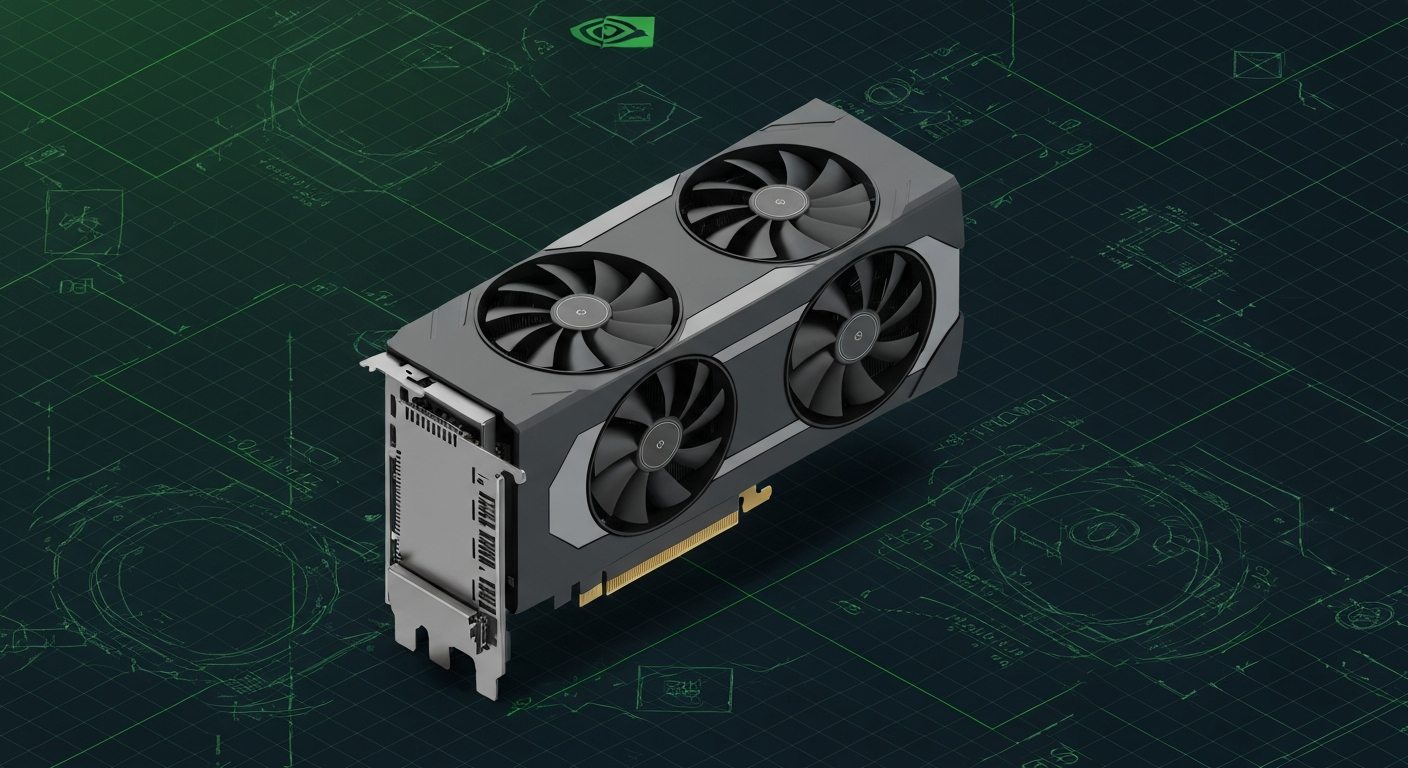
Highest-tier Ampere consumer card. Used market gold for AI: 24GB at sub-$1200 in 2026.
Affiliate disclosure: as an Amazon Associate and partner of other retailers, we earn from qualifying purchases. The verdict on this page is our editorial opinion; affiliate links never influence what we recommend.
Sub-scores sum to 743 / 1000. Headline = 743 × 0.70 (Estimated-confidence discount) = 520. This is an algorithmic performance-tier score — distinct from, and often lower than, the editorial “Our verdict” below, which weighs value and real-world fit (especially for hardware we haven’t measured yet). How scoring works →
Extrapolated from 1008 GB/s bandwidth — 121.0 tok/s estimated. No measured benchmarks yet.
Plain-English: Workable at 32B, comfortable at 14B and below — snappy enough for a coding agent; vision models supported.
Verdicts extrapolated from catalog VRAM + bandwidth + ecosystem flags. Hover any chip for the rationale. Want measured numbers? Submit your own run with runlocalai-bench --submit.
What it does well
The RTX 3090 Ti is the late-Ampere flagship — a refined 3090 with bumped clocks, GDDR6X memory at 1008 GB/s (vs 3090's 936 GB/s), and a slightly more aggressive thermal envelope. 24 GB GDDR6X at 1.0 TB/s + Ampere tensor cores at $1,999 MSRP / $700–$1,100 used. For everything that fits 24 GB, it's marginally faster than RTX 3090 on memory-bound decode (the difference is ~5–8% in real LLM workloads — the bandwidth bump matters but not transformationally). Power draw at 450 W TDP is brutal — same as RTX 4090 and substantially more than 3090's 350 W. The card was the "halo SKU" of Ampere — released near the end of the architecture's commercial life — so it's relatively rare in used markets, but available with strong service histories from gamers who upgraded. Full CUDA stack works (sm_86 Ampere): Ollama, LM Studio, llama.cpp, vLLM, ExLlamaV2. For buyers who specifically value the marginal bandwidth advantage over 3090 and accept the power+heat tradeoff, RTX 3090 Ti is the niche flagship-Ampere pick.
Where it breaks
- Marginal vs RTX 3090 — pricing usually doesn't justify the gap. Used 3090 at $700-1000 vs used 3090 Ti at $700-1100 = nearly identical pricing for ~7% more bandwidth and 28% more power draw. For most buyers, regular 3090 wins on $/throughput and TCO.
- 450 W TDP is a real planning problem. Sustained inference at 450 W needs serious case airflow + a quality 1000 W+ PSU + acceptance of meaningful summer heat in the room. The 3090's 350 W is much more practical.
- No FP8 native (Ampere limitation). Modern frameworks that exploit FP8 throughput don't get speedup. Same constraint as all Ampere.
- Architecture is two generations behind in 2026. Ada Lovelace (RTX 4090) and Blackwell (RTX 5090) deliver dramatically better tensor compute. New CUDA features land on Ada / Blackwell first.
- Resale liquidity is awkward. RTX 3090 has very high secondary-market volume; 3090 Ti's smaller production run means less price discovery. Resale pricing tends to wobble with availability.
- Pricing unclear vs RTX 4090. Used 4090 at $1,500–$1,800 has FP8 native + ~70% more compute + better thermals + same 24 GB. The 3090 Ti's natural niche is squeezed from both sides — by 3090 below and 4090 above.
Ideal model range
- Sweet spot: 70B Q4 single-card with 16K context — fits 24 GB comfortably. 25–35 tok/s decode (slightly faster than regular 3090).
- Sweet spot: 32B FP16 with 32K context, 32B Q8 with 128K+ context for long-document workflows.
- Sweet spot: Multi-model agentic stacks fitting 24 GB — 14B + 7B + embedding model simultaneously.
- Sweet spot: Local fine-tuning at 13B QLoRA, 7B FP16 full fine-tune.
- Comfortable: Anything an RTX 3090 does, with marginal bandwidth advantage.
Bad use cases
- Buyers shopping new at MSRP. $1,999 retail in 2026 is wildly overpriced. Pick used 3090 ($700-1000) or used 4090 ($1,500–$1,800) instead.
- Cost-conscious 24 GB seekers. Used 3090 at $700–$1,000 is dramatically better $/$ for almost identical AI throughput.
- Power-constrained desktops. 450 W TDP is too much for many builds. Pick 3090 (350 W) or 4090 (450 W but with better perf/W).
- Anyone wanting current-gen architecture features. Pick RTX 4090 (Ada FP8) or RTX 5090 (Blackwell FP4).
- 70B+ workloads. Same as all 24 GB cards — pick 32 GB+ for 70B FP16, 48 GB+ for serious 70B-class production.
Verdict
Buy this if you find a 3090 Ti at $700–$900 used (similar to 3090 pricing), you specifically value the ~7% bandwidth advantage on memory-bound decode, you have power+thermal headroom for 450 W TDP, and a regular 3090 isn't available in your local used market. RTX 3090 Ti is the niche pick for late-Ampere collectors and buyers who want flagship-Ampere positioning.
Skip this if used RTX 3090 is available at similar pricing (almost always wins on $/$), you can stretch to used RTX 4090 (~$1,500–$1,800 with Ada-gen + FP8), you're power-constrained (3090 at 350 W is much more practical), or you're shopping new (MSRP at $1,999 is unreasonable in 2026).
How it compares
- vs RTX 3090 (24 GB) → Same memory tier, same architecture. 3090 Ti has ~7% more bandwidth (1.0 TB/s vs 936 GB/s) + ~10% more compute + 28% more power draw at similar used pricing. Pick regular 3090 for $/$ ; 3090 Ti only when 3090 is unavailable or specifically priced lower. See /compare/rtx-3090-ti-vs-rtx-3090.
- vs RTX 4090 (24 GB) → Same 24 GB. 4090 has Ada-gen + FP8 + ~70% more compute + same 450 W TDP at $1,500–$1,800 used vs 3090 Ti $700–$1,100. Pick 4090 for FP8 + Ada-gen on 24 GB; 3090 Ti for value at ~half the price.
- vs RTX 5090 (32 GB) → 5090 has 33% more VRAM + ~80% more bandwidth + Blackwell + FP4 native at $2,000–$2,500. Pick 5090 for new builds; 3090 Ti for value used.
- vs RTX A6000 (Ampere) (48 GB) → Same Ampere architecture, A6000 has 2× memory + ECC + Studio drivers + workstation pedigree at $3,500–$4,500 used. Pick A6000 for 48 GB workstation; 3090 Ti for cost-floor 24 GB with similar Ampere generation.
Overview
Highest-tier Ampere consumer card. Used market gold for AI: 24GB at sub-$1200 in 2026.
Some links above are affiliate links. We may earn a commission at no extra cost to you. How we make money.
Specs
| VRAM | 24 GB |
| Power draw (peak) | 450 W |
| Released | 2022 |
| MSRP | $1999 |
| Backends | CUDA Vulkan |
Models that fit
Open-weight models small enough to run on NVIDIA GeForce RTX 3090 Ti with usable context.
Hardware worth comparing
The closest alternatives by price, memory bandwidth, and form factor, plus a step up and down — so you can frame the buying decision against real options.
Frequently asked
What models can NVIDIA GeForce RTX 3090 Ti run?
Does NVIDIA GeForce RTX 3090 Ti support CUDA?
How much does NVIDIA GeForce RTX 3090 Ti cost?
Where next?
Reviewed by RunLocalAI Editorial. See our editorial policy for how we research and verify hardware specifications.